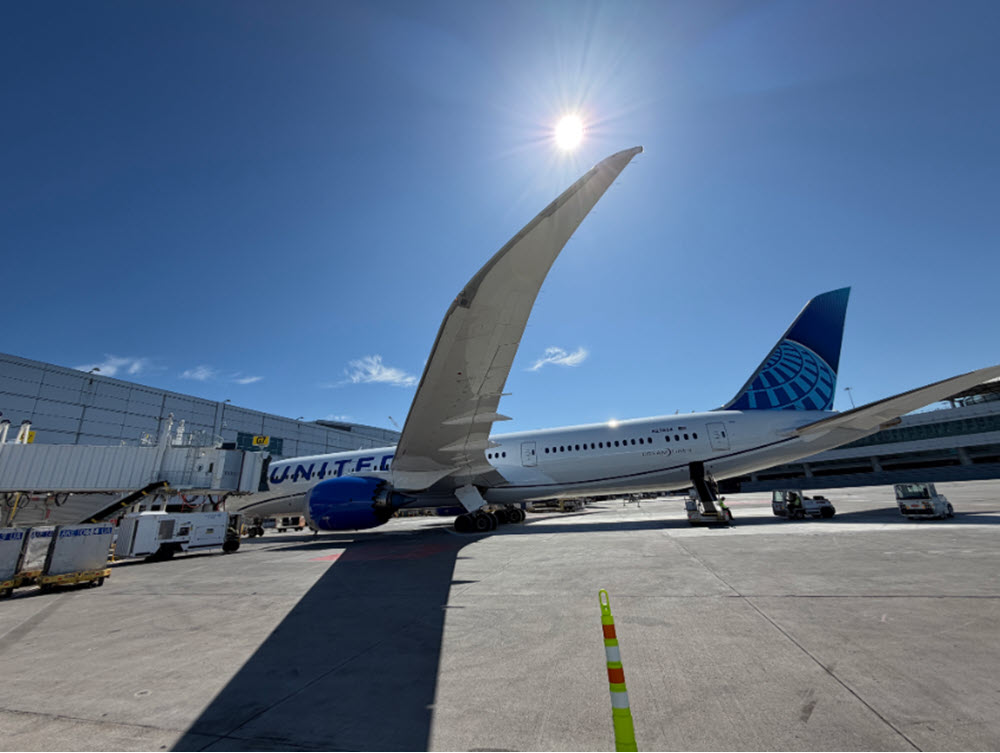
The Austin Webcor Joint Venture (AWJV) has handed over Gate 7 of the International Terminal to San Francisco International Airport. It is the second gate to be completed under the Boarding Area G Gate Enhancements project. Gate 4 was completed in May.
The team has moved on to the next of the 10 gates that comprise the project.
Completing a gate includes demolishing and replacing concrete panels and replacing jet bridges, along with their associated electrical and IT infrastructure. The bridges, from Utah-based Oshkosh AeroTech, come in piece by piece on large trucks. An Oshkosh subcontractor assembles them onsite using a mobile crane.
"We are also scoped to do demo of existing conduits and electrical wiring, and install new conduits, panelboards, Wi-Fi systems, CCTV, telecommunications systems, and other gate infrastructure” says Senior Project Engineer Nebu Philip.
A manufacturing delay affecting the permanent Pre-Conditioned Air (PCA) unit proved challenging. AWJV coordinated with SFO and United Airlines, with United providing a mobile PCA unit to maintain gate operations. Gate 7 was completed and handed over on schedule, and the mobile unit remained in service for eight days with no impact to aircraft operations.
It typically takes about three months to complete work on a single gate, but MARS (Multiple Aircraft Ramp System) gates — including Gates G11/12, which are part of the current phase of the project — will take a little longer. Designed as MARS gates, these gates provide flexibility to accommodate different aircraft configurations and operational needs for larger aircraft like the Boeing 747 or Airbus A380.
“With the MARS gate, there’s a lot more flexibility in how the gate can be used, so we're designing and fabricating different structures and infrastructure to support different aircraft and boarding configurations,” Nebu says.
G11/12 is expected to be used mainly by Lufthansa, United Airlines, Air India and Japan Airlines.


