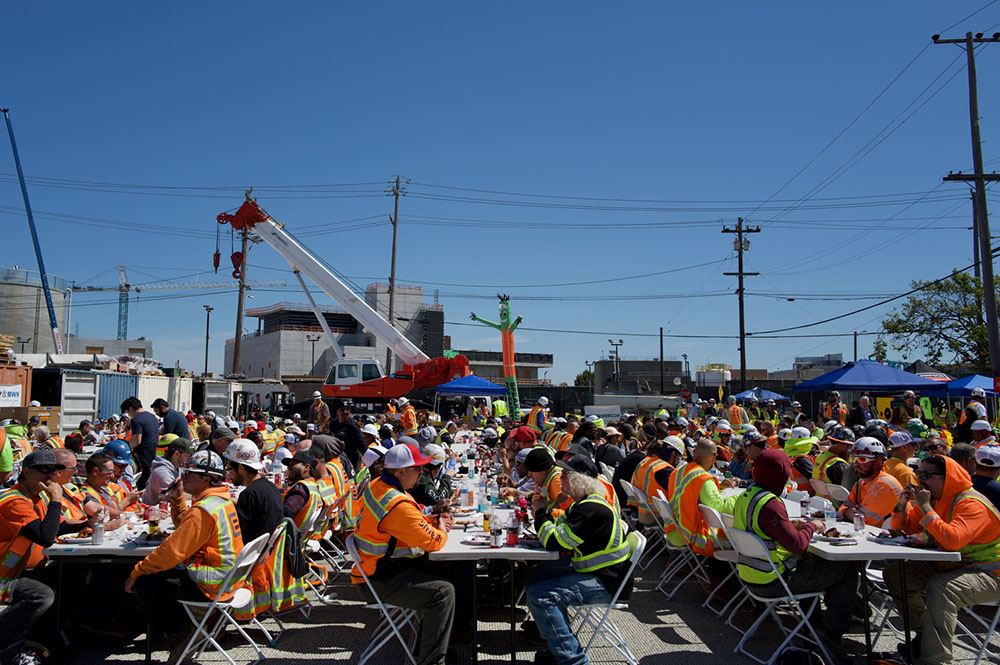
Rick Sanfillipo grew up immersed in construction—his grandfather worked at a general contractor, his dad built furniture, and his mom remodeled homes.
Following in their footsteps felt like a natural choice, especially after years of carefully observing his family’s craftsmanship. As a kid, he paid close attention to how things physically came together, thoughtfully soaking in the basics of the construction process.
He spent his teenage years working with his dad and grandpa on whatever jobs he could handle—residential add-ons, backyard patios, pool installations, etc.
Shortly after turning 18, he joined a local construction company focused on home improvement work, where he continued working for the next couple years.
By the time he was 20, however, he was ready for a change. He was tired of the inconsistency of construction jobs and realized he craved greater career stability. He decided to leave the home improvement contractor to work in the grocery/retail industry, where he continued working for the rest of his early 20s.
After a couple years, it became clear that his new industry’s work schedule wasn’t sustainable; working every major holiday and weekend was wearing down on him. So, he decided to pivot back to construction.
Twenty-five years later, he hasn’t looked back. Not only did he realize construction was the path for him all along, but he ended up passing his love for the industry onto his own son.
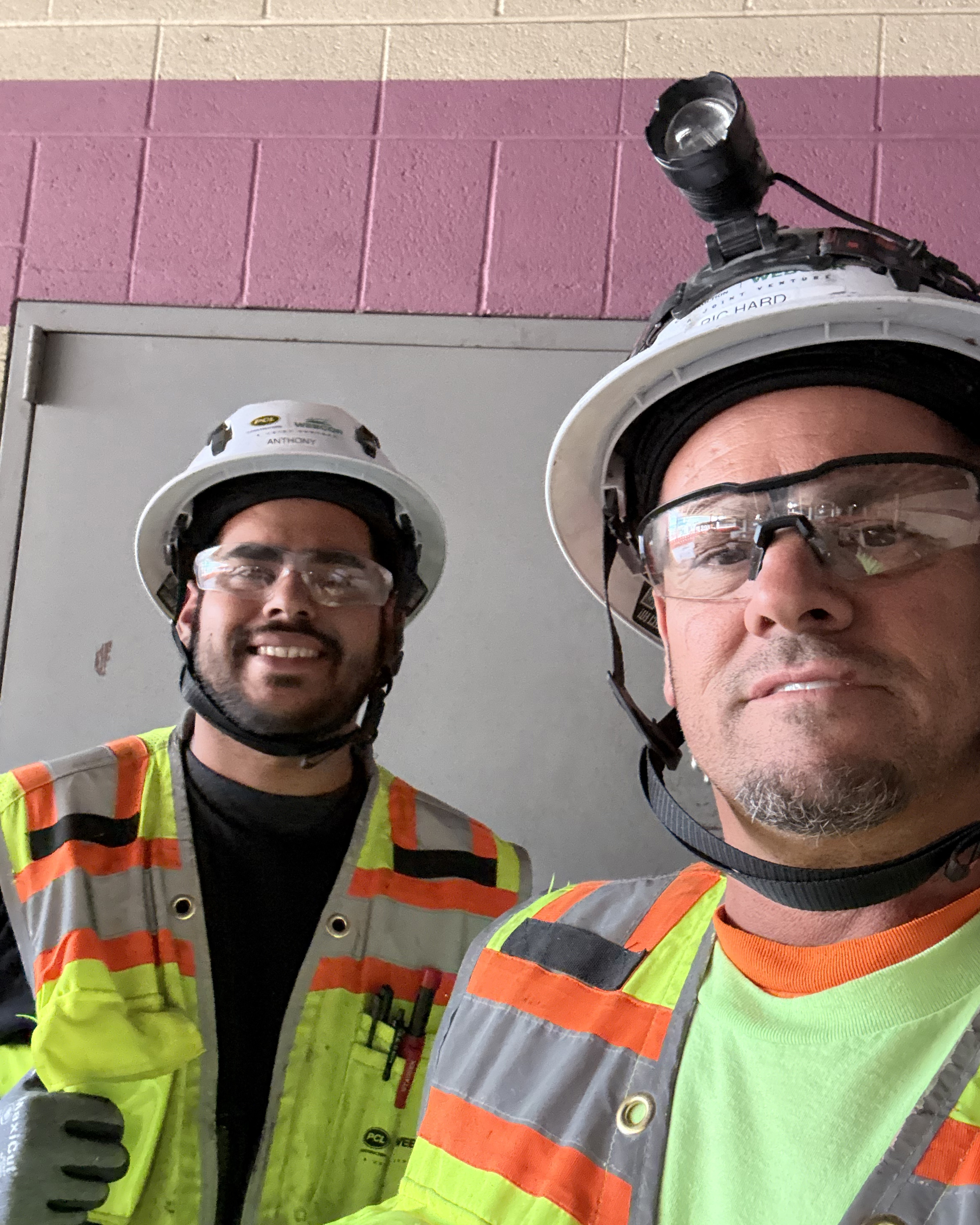
“Nothing makes me prouder than visiting my old projects and seeing them standing tall all these years later,” he says. “I love showing off my work to my son, Anthony, who now works at our UCSB San Benito Student Housing Project.”
Growing & Leading at Webcor
Since joining Webcor Carpentry over a decade ago, Rick's befriended countless teammates, taken on complex scopes, and continued to tackle each unique challenge with excitement and determination. After all, he says, constant change is the best part of working in construction.
· “I love that it’s never the ‘same old’ routine here,” he says. “We’re not just building everyday doors and windows—we’re building some really interesting scopes and making fancier stuff that’s different from the norm.”
· One of his favoriteprojects was the custom-made Accoya wooden benches—unique for their curved center—at UC Irvine’s Oso Towers.
As much as he’s learned and appreciated about the technical challenges of carpentry, however, he’s come to feel most proud of his immense growth as a people leader and teammate.
· “Don’t underestimate thedifficulty of taking different directions from different people,” he says. “You never have the same boss in this career. Learning to be managed by differentpeople and adjust to different personalities is a skill in itself.
· “That’s one of the most valuable lessons I’ve learned—everyone’s different and has different perspectives, but we all have to agree to take care of one another and get the job done. Because if we don’t get the job done, we’re not getting another one.”
The Power of Psychological Safety on Jobsites
In addition to safety basics like proper personal protective equipment (PPE), Rick’s passionate about an aspect of construction safety that (up until recently) has been largely dismissed by our industry: psychological safety.
After nearly three decades on jobsites, Rick understands the immeasurable value of open and judgment-free communication better than most. Checking in with teammates when something feels off, asking thoughtful (but non-invasive)questions, and expressing genuine concern for teammates’ well-being are the ultimate ways to build trust.
· “If you know construction workers, you know they always have something going on,” he says. “It’s good to be open to those vulnerable conversations and listen to their thoughts and feelings.
· “There are times when you can just tell someone isn’t having a good day. I’ve made a lot of friends by being open and talking to people—guys I worked with years ago still call me up to talk about whatever’s on their mind.”
Simply put, Rick hopes Safety Week will inspire more construction professionals to take safety seriously—from fostering psychologically safe work environments to following approved safety protocols at all times to help ensure everyone goes home safely.
“When I started working in construction, safety wasn’t prioritized or discussed nearly as much as it today,” he says. “We’ve come a long way, but greater awareness is still needed.”

For decades, the U.S. Green Building Council’s (USGBC) LEED rating system has served as the primary yardstick for sustainable construction. The introduction of LEED v5 represents more than a simple iteration of previous standards.
For decades, the U.S. Green Building Council’s (USGBC) LEED rating system has served as the primary yardstick for sustainable construction. But as the climate crisis evolves from a distant threat to a daily reality, the yardstick is changing.
The introduction of LEED v5 represents more than a simple iteration of previous standards.
The Decarbonization Mandate
The most significant departure from previous versions is a relentless focus on carbon.
"LEED v5 is really pushing projects to decarbonize as much as possible," says Suzie Pedersen, Sustainable Design Advisor at project designer Perkins&Will. "It requires us to complete a carbon projection plan and figure out how to decarbonize the building over a 25-year timeline. It’s a much bigger emphasis in the overall rating system than we saw in v4."
This focus extends deep into the supply chain through a "multi-attribute optimization" of materials. Rather than merely collecting Environmental Product Declarations (EPDs), teams must now leverage a common materials framework that simultaneously assesses health, social equity, and climate impacts.
A Human-Centric Framework
Beyond the "green" metrics, v5 offers greater capacity to address the human element of construction. This includes strict prerequisites for accessibility and inclusion, as well as credits for hiring from the local labor force and for supporting apprenticeship programs.
"It includes more of a human aspect than before," Suzie notes. "We are focused on making this an inclusive site for both building occupants and the broader community it serves. This effort goes beyond a typical v4 project—we’ve carefully evaluated the climate risks and social conditions of the area and are designing a building that responds directly to those factors, ensuring it serves the community effectively over the long term.”
The East County Strategy: Chasing Platinum
For the team at the East County Service Center, the decision to pursue v5 wasn't just about meeting a standard — it was about testing the limits of what is feasible for a public-facing facility. The project is dialed in on 82 points, placing it within the threshold for a Platinum rating, which requires 80 points.
What they're saying: Project Director Alec Bangs attributes much of this potential success to a client — Contra Costa County — that views sustainability as a core priority.
"We originally assumed we’d hit Gold under v4 and perhaps stretch for Platinum," Alec says. "But with the way everything is shaking out, we are in a position to hit Platinum under v5. It’s a team effort, and it takes a client who values it.
The project boasts an impressive array of sustainable features that serve as the engine for these credits:
The Burden of Documentation
Yes, but: If there is a hurdle to the new standard, it is the rigor of the "integrated design process." LEED v5 requires significantly more upfront work, forcing contractors, architects, and consultants to align before the first shovel hits the dirt.
"The rubber will meet the road with documentation," Alec explains. "The requirements are changing and becoming more stringent.
She agrees that the learning curve is steep. "We are still finding small things — requirements we didn’t fully understand at first. It requires clarifications with the LEED coach at USGBC to make sure we are interpreting the credits correctly."
A Path Forward
The East County Service Center is already being viewed as a "first-in-class" case study across Perkins&Will’s studios, serving as a template for integrating geothermal and mass timber under the new v5 rigor.
For Webcor, the lesson is clear: the era of "checking the box" for sustainability is over. Achieving the highest levels of certification now requires integration and upfront assessment that were previously optional.
LEED v5 is designed to be difficult, Suzie notes.
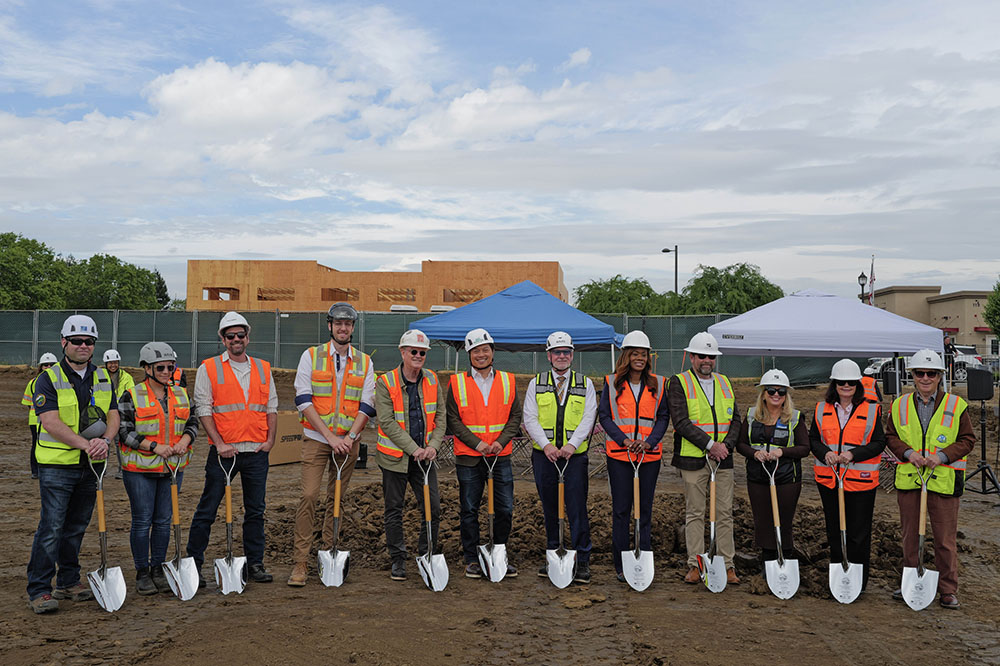
On April 1, our East County Service Center (ECSC) team joined representatives from Contra Costa County (CCC), Perkins&Will, BKF, and MIG to celebrate breaking ground on the $150 million essential services facility in Brentwood, CA.
On April 1, our East County Service Center (ECSC) team joined representatives from Contra Costa County (CCC), Perkins&Will, BKF, and MIG to celebrate breaking ground on the $150 million essential services facility in Brentwood—a major milestone representing the progressive design-build team’s tireless, exceptionally fast-paced efforts over the last few months.
Once complete, ECSC will offer local residents a one-stop hub for a wide variety of essential services while keeping sustainability top of mind: The building will be powered by geothermal and solar energy systems, and the use of mass timber in lieu of typical building materials will significantly lower our carbon footprint.
It’s a unique project rooted in community, both in purpose and delivery. The building was intentionally designed as a public cooling space to help residents and visitors combat Brentwood’s notorious summer heat, particularly in the event of a power outage or low air quality.
For CCC’s East County residents, this vital project has been a long time coming. ECSC’s Brentwood location means they’ll no longer have to travel 30+ miles to Martinez (where the CCC Admin Building, which we delivered in 2023, is located) to access essential services from Employment & Human Services, Contra Costa Health, Veterans’ Service Office, and more. It will also dramatically reduce CCC employees’ commute times, as many of them are East County residents who regularly battle rush hour traffic to and from Martinez.


