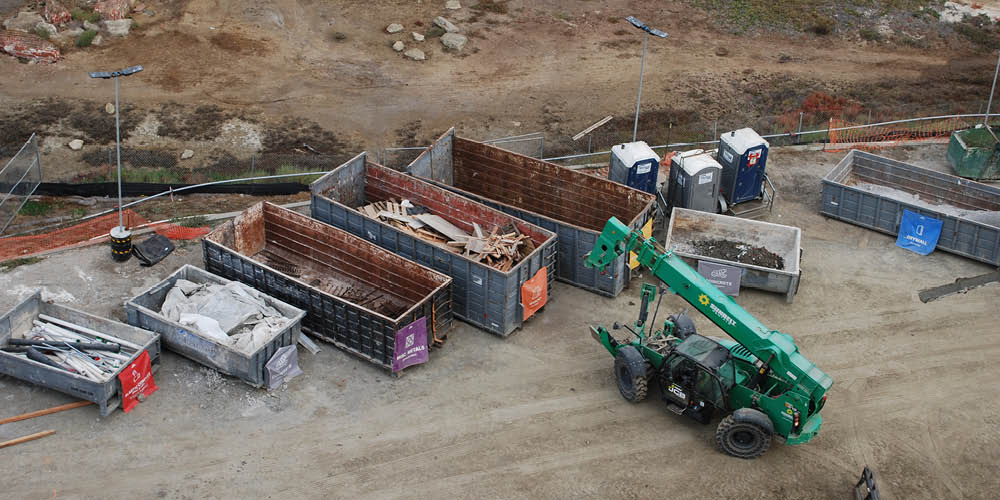
Most of us practice circularity without thinking about it. We buy secondhand clothes, compost food scraps, and bring reusable bags to the grocery store, all to keep materials in use and out of the landfill. Construction has been slower to follow. The industry still relies largely on a linear take-make-waste model: materials are pulled from the earth, turned into buildings, and then hauled to landfills where they sit for decades. In California, construction and demolition debris makes up roughly a quarter of the waste sent to landfills. That waste is also an untapped opportunity. Reducing, reusing, and recycling create more jobs than disposal, conserve finite resources, and cut greenhouse gas emissions. USGBC’s TRUE Zero Waste certification, recently expanded from operating buildings to active construction projects, gives project teams a clear way to act on that opportunity. Webcor delivered the world’s first two TRUE-certified construction projects: Genesis Marina, a 560,000-square-foot office and lab campus in Brisbane, and Contra Costa County’s Administration Development and Renovation project, the first public project to earn the certification. Together they diverted more than 95 percent of their waste from landfill. Across both projects, zero waste was built in at every phase, from predesign and specifications through jobsite trailers, subcontractor training, and waste-sorting bins in the field. The results show that keeping materials in circulation is good for the planet and also a practical way to lower project costs, reduce embodied carbon, and deliver more value to owners.


