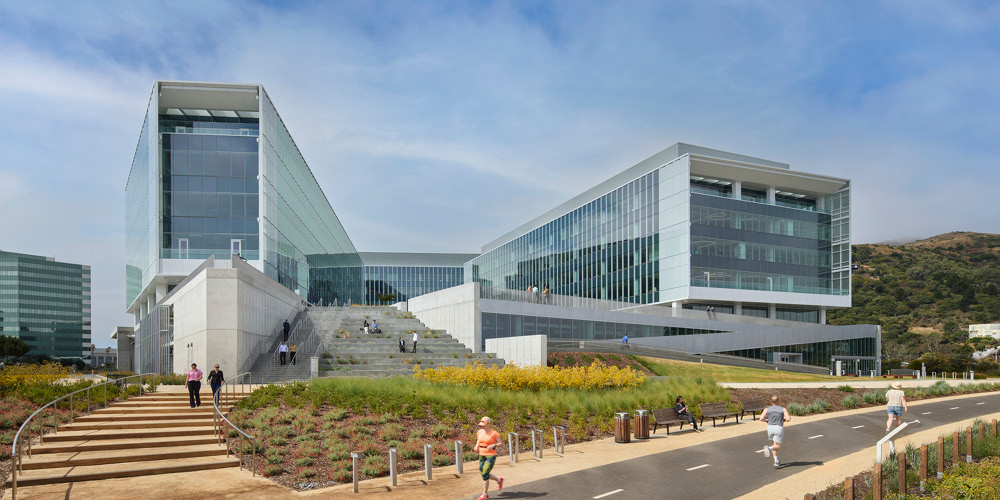
In a feat believed to be among the first of its kind, Webcor and its project partners successfully developed and placed a low-carbon concrete mix for drilled-shaft auger-cast piles.
- This isn't just another incremental gain; it is a solution to one of the most stubborn challenges in the construction industry.
The Tremie-crete Problem
Deep-foundation concrete, often referred to as tremie-crete, is notoriously difficult to decarbonize.
- Most green baselines (measured by Global Warming Potential (GWP)) don’t easily apply to drilled shaft foundations because of the specific physical properties required during the "fresh state" of the pour.
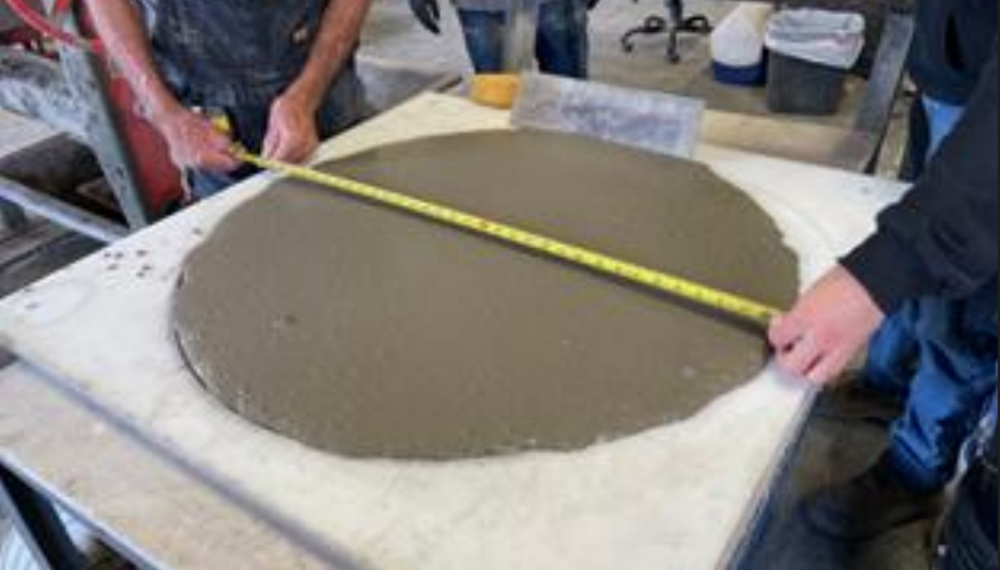
- While standard concrete is often judged by its final strength, tremie-crete is driven by rheology, or how the mixture flows.
To work at these depths, the mix must have high fluidity and strong resistance to "bleeding" and segregation under high hydrostatic pressures.
- Historically, achieving this meant using mixtures with very high Portland cement contents to increase paste density. As Webcor Concrete Director Eric Peterson points out, "The use of high amounts of cement in tremie-crete is not determined by strength. It is driven by the rheological requirements of the mixture."
Breaking the Status Quo
The project team was initially on the verge of abandoning the low-carbon approach.
- Early attempts did not perform well in terms of strength or fresh-state properties, and a traditional "back-up" mix carried a heavy carbon cost of 430 kg CO2-eq/m3.
- However, Eric — who chairs the ACI Committee 237, Self-Consolidating Concrete (SCC) — saw an opportunity to apply SCC principles to the foundation piles.
For four months, the team Keller, CEMEX, and Webcor Concrete worked at CEMEX’s laboratory in Livermore to develop and test a new mixture.
- One major hurdle was a site-added "fluidizer" that lacked an Environmental Product Declaration (EPD) and had not yet been used in the Project’s previous strength tests.
- Without an EPD, the total carbon impact could not be quantified, which is required by SFO.
- Webcor assisted the manufacturer of the fluidizer in obtaining a verified product EPD through Climate Earth and ASTM, allowing the team to confirm a GWP of 270 kg CO2-eq/m3—well below SFO’s requirements.
From Lab to Labor
In the lab, the mixture performed like a champion, but as any seasoned practitioner knows, the lab is a controlled environment.
- When early field results for the test piles appeared to differ from the trial batching in the lab, Eric spent the better part of two weeks in the field observing the batching, curing, and testing processes.
- He identified several critical issues, including the addition of water in the field and the handling of specimens before transfer to the lab. He also documented issues occurring at the lab related to preparation and testing procedures.
"There is a significant difference between the capability of a concrete mixture and how it performs during high-paced production," Eric notes.
- By resolving these field-level and testing gaps, the mix began to behave as it had in Livermore.
- It developed significant strength between 28 and 56 days, consistently exceeding 6,000 psi and demonstrating that the Code's "over-design" requirements were satisfied.
The Bottom Line
The success at SFO demonstrates that:
- It is often possible to satisfy both performance requirements and low-embodied-carbon goals.
- We have moved beyond identifying the problem to offering a performance-based solution for the rest of the industry.
- By understanding the challenges and applying a proven strategy, we’ve created a roadmap to decarbonize one of the difficult elements of our structures.
The bottom line: If you think deep foundations are a "necessary evil" in terms of carbon cost, think again.
- We have proven that even 90 feet down, sustainability is achievable with the right mix of expertise, materials, and persistence.
The goal now is to apply the lessons from this success to other projects in our pipeline with similar or more complex challenges.