The economics of a modern convention center are more layered than most people know. Conventions, meetings, trade shows, the steady drumbeat of events — that’s the business everyone sees. But it takes more for a facility like this to pencil out.
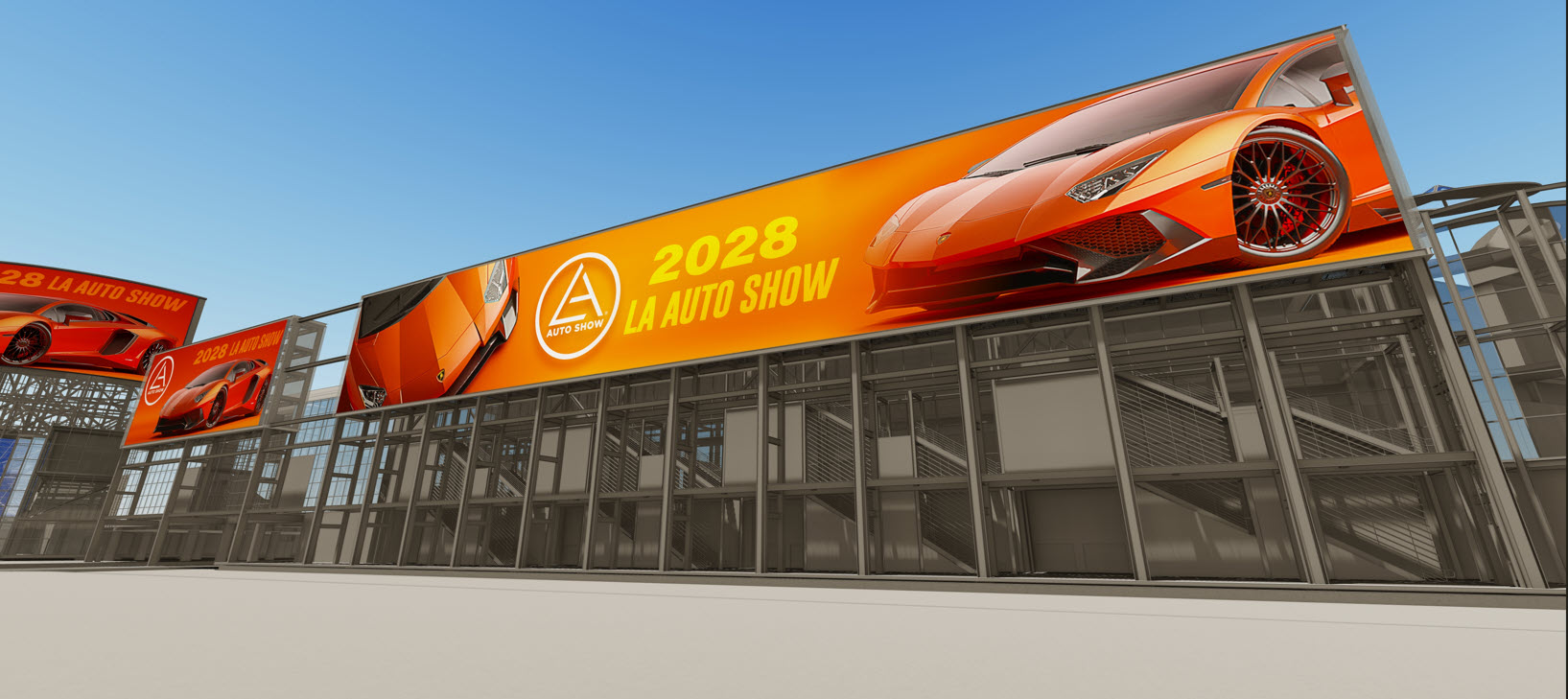
When the LA City Council approved the Los Angeles Convention Center expansion, the project’s value proposition went beyond new design features and Olympic readiness. The digital signage was a meaningful part of the picture. The six screens being designed and built into the façade are expected to generate substantial annual advertising revenue, an element that strengthened the overall business case for the expansion.
It's also what's keeping Raksha Nanaiah busy on a kind of project she never expected to be running for PCL-Webcor, the joint-venture design-builder delivering the LACC expansion.
Six Signs, One Coordinated Program
Raksha is the design manager for the digital signage scope at LACC, and she's wearing a second hat as project manager for the facade itself. The signage package comprises six screens in total: two freeway-facing and four facing Figueroa Street.
"The ones facing Figueroa are animation, full video," she explains. "The ones that face the freeway are static signage, because you don’t want to distract drivers with animation.”
The biggest of the six signs is, by any measure, enormous:50 feet tall, 483 feet long, and just under 25,000 square feet of LED in as ingle sign. It's not arriving on a flatbed. "The sign secondary structural frame comes in sections, so we build it on site," Raksha says. "The cabinets as well — they have to be built in sections on site. And then the modules are like 12 by 12 inches; each one can be carried by hand." No helicopter moment, no massive panel descending slowly from above.
The freeway-facing work is a major, multi-month build that is being carefully coordinated with the broader expansion schedule and the constraints around the requirement to meet the project schedule.
Retrofitting a Working Building
Five of the six signs are being mounted to the existing structure, which means that before any LED gets installed, "We have to remove the existing facade, strengthen the existing structural elements, install the sign frames, put the facade back, and then install the LED, "Raksha says.
It's all happening while LACC remains open for business. The building will be occupied and booked with events for the entire 18 months of construction. That puts most of the work on the night shift and makes coordination with LACC operations a daily exercise in maintaining egress, protecting attendees, and keeping the building running while a few thousand tons of structural steel and LED get bolted to its skin.
The installation deadline is March 31, 2028, but the signs won't go live then; they'll sit dark through the 2028 Olympic and Paralympic Games. The contract calls for testing and commissioning to occur after the Olympic pause period, with go-live in February of the following year.
A Year at City Hall
The technical work, as demanding as it is, has been matched by an equally important effort on the regulatory side: a city ordinance.
Digital signage of this scale, square footage, brightness, and refresh rate falls outside the existing LA code, so permitting the six signs involves an amendment to the City’s ordinance to address this new type of installation. That process began in May 2025 and involves review by the City Attorney’s office and the mayor’s final signature before the ordinance will be approved.
"It takes that long because of the brightness and sign square footage,” Raksha says. Proposed revisions address the refresh rate, among other things.
The freeway-facing signs loop in CalTrans because there are minimum-distance rules between freeway signs and square-footage thresholds that must be met. The Figueroa-facing signs are simpler — they just requiredirector-level approval from City Planning, which has been involved from early in the process.
Video rendering of freeway-facing signage
In parallel with the City Council process, the design team has been cycling submissions through the city’s plan check. Each submission draws detailed feedback from the city’s subject-matter experts across structural, electrical, mechanical, and architectural disciplines. The team works through that feedback, resubmits, and refines the package with each round. Permitted drawings will follow the council’s adoption of the amended ordinance, and the team is coordinating closely with the city to keep that sequence on track.
"It's been a process," Raksha says.
Applying Experience at a Larger Scale
Raksha brought directly relevant LED experience to LACC from the Los Angeles COSM project, where the team built the infrastructure supporting the LED scope. (COSM is an immersive entertainment venue in Inglewood, California, that uses a massive LED dome to present live sports, entertainment, educational, and cultural events.) At LACC, she is applying that background to a larger, more complex signage program, this time leading the installation side of the work as well.
"So now I’m getting that experience,” she says of a scope that has broadened her work well beyond the LED itself.
That's the part she keeps coming back to. The thing about a digital signage package on this scale, she says, is that it isn't really a digital signage package. It's everything around the LED.
"When we talk about digital signage, it's not a standalone system. It's not like a single system we're building. We're touching the existing structure. So, as a design manager, I'm gaining experience in retrofitting, and I'm working on key structural architecture. I'm looking at the design as a whole, not just the LED scope. From a learning standpoint, it's been a great experience for me. Although I'm doing the facade and the signage, I'm getting exposure to all of the scopes: MEPFs, utilities, structure, concrete, etc."
Why it Matters
When the screens light up alongside the broader expansion, most people who drive past on the 110 or walk down Figueroa won’t think about the ordinance work, the careful construction sequencing, or the structural retrofit hidden behind the façade. They’ll see the show.
What they’ll be looking at is a signature element of the expansion, one that helped strengthen the case for the project and now anchors the building’s new public face.
It also stands as one of the most technically demanding façade builds the PCL Webcor Joint Venture has taken on, and a showcase for the depth of experience the project manager and the wider team bring to it.


.jpg)