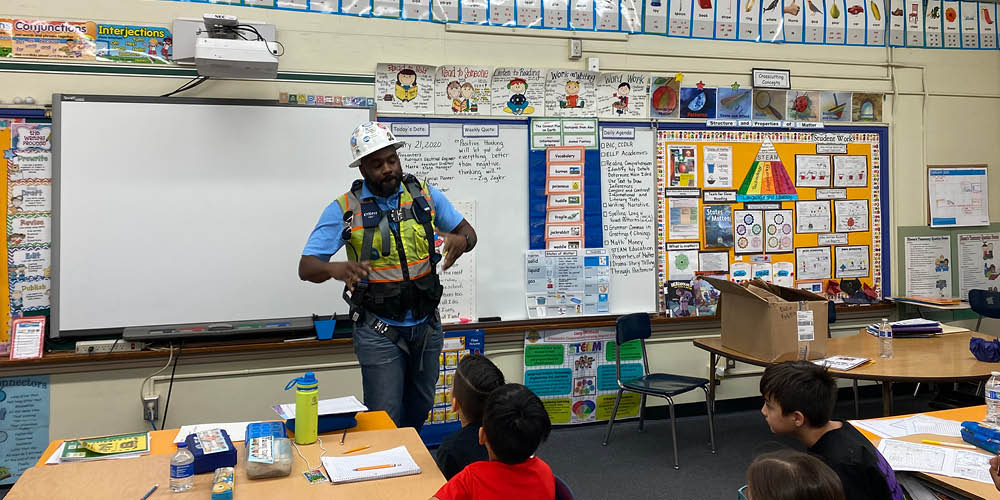
To lead this critical function, please welcome Chris Jones. Chris brings a wealth of experience from nearly two decades in construction safety. He’s a professional who thinks deeply about the human element of his work. His philosophy goes well beyond compliance, grounding safety in relationship equity and in viewing the whole person.
Chris was looking for a new role after a frustrating period at his former company, where he felt safety was pushed to the back burner on large-scale projects, and his own career growth was stymied.
He came to Webcor with his antennae up, asking key questions about the company’s real intentions.
When he spoke with Greg Chauhan, he asked, “What is Webcor’s appetite for growth and safety and to do things differently?”
The response: a very large appetite. That sentiment was reinforced during his lengthy interview process – which lasted four to five weeks – and by the general feeling he got from the leadership team. Chris sees a key strength in Webcor’s “tenured safety professionals” and a willingness to simply “speak up for safety” – something he respects deeply.
Chris’s core operating philosophy is best summed up by his own equation: Relationship equity yields valued perspective.
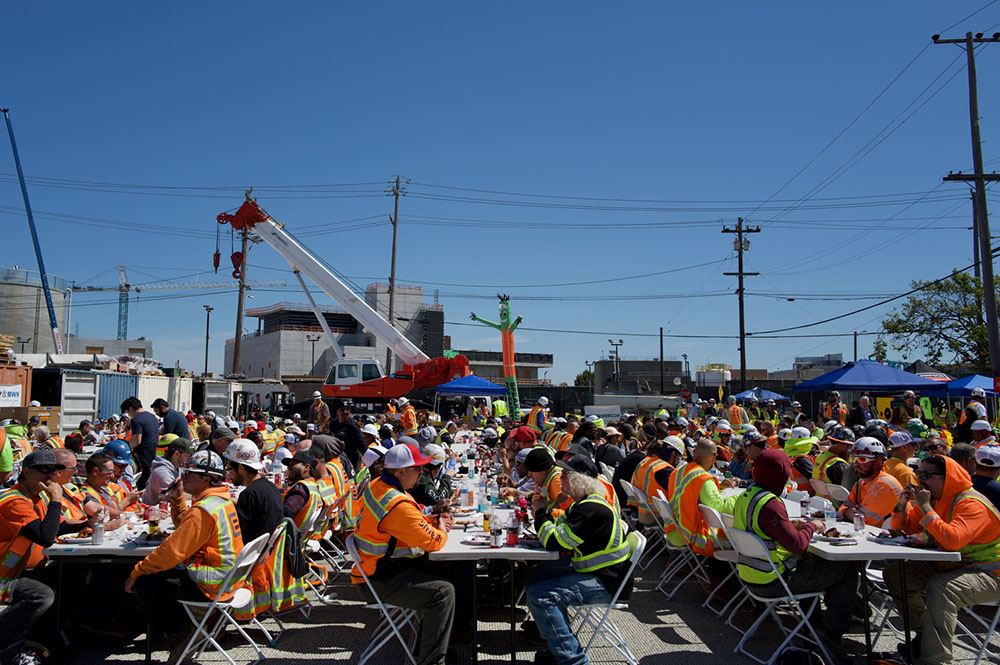
What does that mean on a construction site? It means building a personal connection – an open space – between the safety professional and the craft worker. This relationship is what allows advice to be heard and acted upon.
He posed a hypothetical: If a craft worker has a relationship with the safety professional, the conversation sounds like this: “I see you doing things this way, what do you think about trying it that way?” Because of the relationship, the craft worker values the perspective and will consider the change. Without that relationship, the response is often “Who are you?” or a shrug.
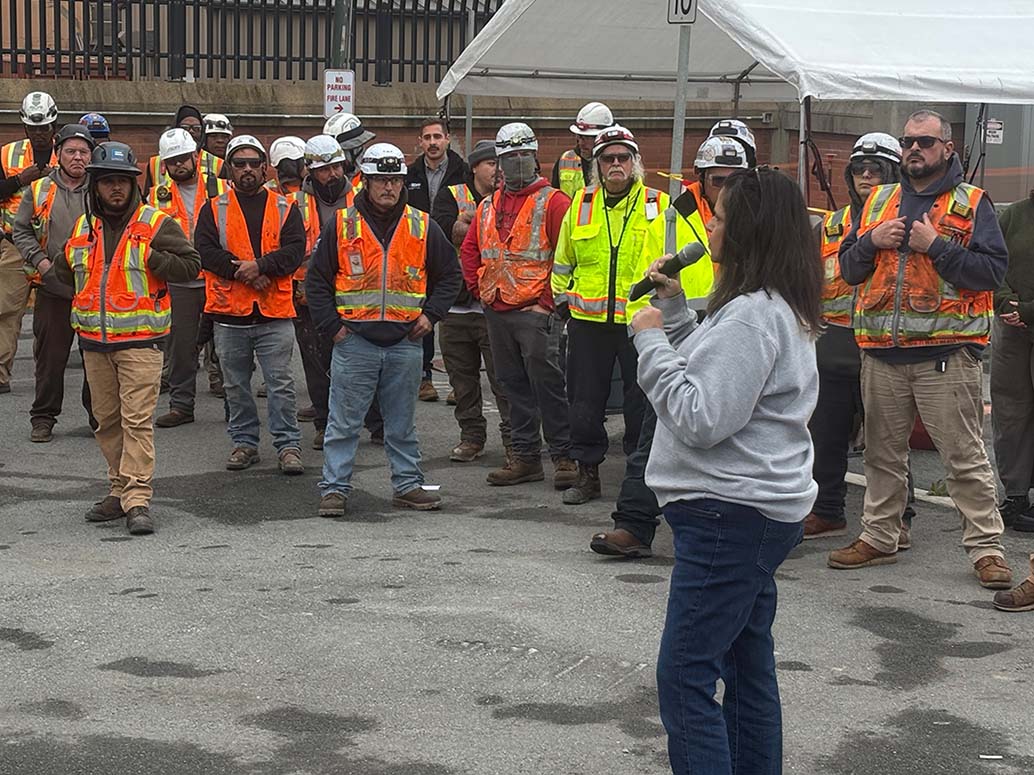
This philosophy highlights Chris’s approach to elevating safety at Webcor. His first priority has been to increase engagement with his team, starting monthly one-on-one meetings, which he says provide a crucial opportunity to listen: “Some people just want to be heard. And once they’re heard, they can start to relax.”
For Chris, safety on the job site is inextricably linked to life outside of it. The construction industry has begun to recognize this, particularly concerning the mental wellness of its predominantly male workforce.
“We have to consider the whole person when they’re on the job site, not just what they’re doing for us at the job site, right?” Chris asks. “You bring it all with you. And so, when we can consider the whole person, we’ll do a lot better with safety. We’ll enhance psychological safety,” which can be defined as a shared belief held by members of a team that the team is safe for interpersonal risk-taking, such as speaking up with ideas, concerns, or mistakes, without fear of punishment or humiliation.
He is absolutely right. Mental health concerns, a lack of focus, or preoccupation can lead directly to on-the-job incidents.
Chris is willing to challenge Webcor on its stated commitment. He recently saw the line in the company’s safety materials that executive leadership “will exhaust or go to the limits to promote safety.” He took a picture of it, he says.
“I’m going to put this to the test,” he says. “We’ll see, because I’ll challenge that in a good way, and see where we’re willing to go”.
With a new leader so clearly focused on building a culture that values relationships, transparency, and holistic wellness, Webcor is well-positioned to meet Chris’s challenge and elevate its safety culture to an even higher level.
While establishing his team, Chris is also looking ahead. He sees potential for Artificial Intelligence (AI) in safety, particularly for hazard recognition via platforms and wearable devices, and for streamlining documentation, like using generative AI to produce a first draft of a job hazard analysis (JHA).
He also plans to expand our safety culture by boosting the profile of vendors and subcontractors who share our commitment. “Why not lift their profile? Why not show them off?” he asks.
Born in St. Louis, in 1976, Chris moved to Southern California in the mid-1980s. He’s now based in Los Angeles.
When he's not focused on work, Chris enjoys riding his motorcycle and watching college football on Saturdays. Most of all, he cherishes hanging out with his four biological daughters and three stepchildren, especially his older daughters (aged 30 and 28), with whom he gets to talk about life, offer advice, and share perspectives.
Chris Jones’s background in health, passion for connection, and critical eye for systemic failure make him a true asset to Webcor. He’s here to push us toward a safety culture where leadership’s actions match its words, and the power of human connection keeps us all safe.