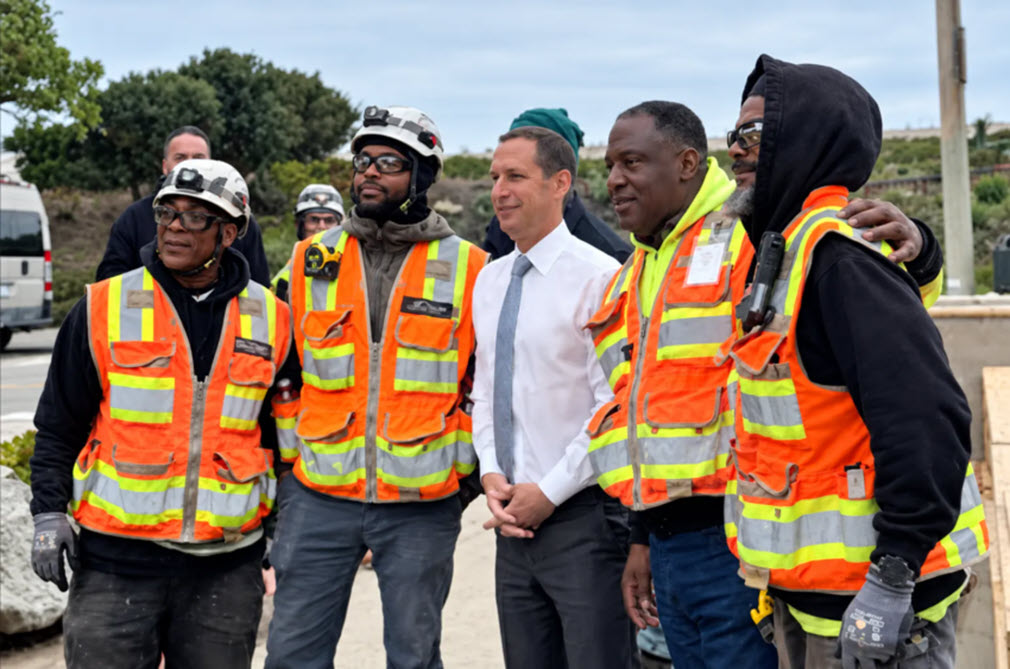
San Francisco Mayor Daniel Lurie stopped by to see the progress and thank the volunteers who built planter boxes at La Playa Park.
BDFP carpenters Alvin Horton, Rodney McKenny, and Joshua Green volunteered their time and skills to build new planter boxes for San Francisco’s One City Day at La Playa Park. Their contribution put Webcor’s Community Core Value into action, using their craft to make a lasting improvement in a local neighborhood.
The effort began when Rudy Gonzalez, secretary-treasurer of the San Francisco Building and Construction Trades Council, asked whether Webcor could help. Alvin, Rodney, and Joshua built the boxes, Webcor Equipment transported them from the Biosolids project to the park, and union volunteers removed the existing planters and installed the new ones. La Playa Park Neighborhood Director Steve Ward helped guide the organization of the work, and Mayor Daniel Lurie stopped by to see the progress and thank the volunteers. (Mayor Lurie's wife is actively involved with One City Day.)
The project also received generous support from Webcor partners. Golden State Lumber donated approximately $5,000 worth of lumber, while Republic Services provided a debris box at a reduced price. Thank you to Alvin, Rodney, and Joshua -- and to everyone who contributed labor, materials, transportation, and coordination -- for demonstrating what Webcor’s commitment to community looks like.
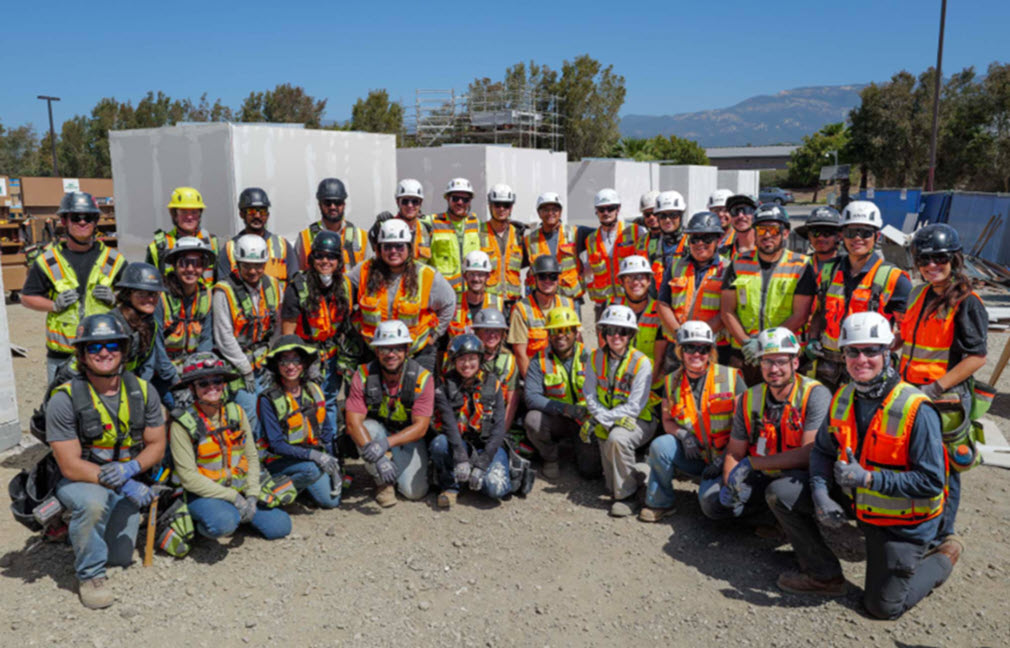
For the first time in NEWB history, the internal Craft boot camp took place at one of our SoCal projects: UCSB San Benito Student Housing. It was also the second time NEWB’s ever taken place outside the Bay Area.
Over the last decade, our project engineers (PEs), assistant project managers (APMs), and assistant superintendents have shut down their ThinkPads and thrown on their tool belts for a week of pouring concrete, installing doors, and hanging drywall at New Engineers Will Build (NEWB)—our annual crash course in all things Webcor Craft.
From navigating the consequences of last-minute design changes to pushing through the physically demanding nature of field work, NEWB is always a uniquely humbling experience. As much as most PEs already respect craft professionals, nothing compares to performing the labor, tackling the unexpected changes, and solving the problems themselves in the field.
Assistant Superintendent, Concrete Lucas Decasper and Assistant Superintendent Mac Hammitt, who co-led this year’s NEWB, emphasize that that’s the whole point—gaining a true understanding of field workers’ perspectives through firsthand experience and most importantly, taking those perspectives back to the office.
“Our tradespeople have years of valuable experience, so we need to rely on what they tell us and put ourselves in their shoes,” Mac says. “I hope all NEWBs walked away with a new level of respect for their trades, as well as new relationships with their fellow NEWBs. They’re going to rise in their careers together, so it’s important to start forming those friendships.”
A Year of NEWB First’s
“I never could have predicted the caliber of training NEWB would provide,” Lily says. “From the team-building events to the level of detail in the planning exercises, the intentional efforts our NEWB leaders/mentors put into providing a great learning environment were outstanding. It was so fun to build relationships with the Webcor team, learn together, share perspectives, solve problems, and celebrate our wins.”
A Week of Hands-on Building With Craft Experts
Since building in-place work wasn’t an option this year, NEWBs spent the entire week building small pods—and new connections—with their teammates:
Day 1 (Monday): Layout, Formwork, Rebar Installation, & Concrete Finishing
NEWB kicked off with an immediate unforeseen challenge: Due to changes in site logistics, they had to shift to a new build area last minute.
Day 2 (Tuesday): Layout, Framing, Hanging Drywall, & Taping/Mudding
In anticipation of Wednesday’s 100-degree heat wave, Lucas and Mac decided to extend Tuesday’s schedule so NEWBs could finish early the next day and avoid the peak heat.
Day 3 (Wednesday): Hanging Drywall & Taping/Mudding
As expected, Wednesday was a real-life lesson in heat illness prevention planning. Between taping and hanging the last of the drywall, NEWBs paused work for regular shade and hydration breaks as the temperature crept into the mid-80s.
Day 4 (Thursday): Hanging Drywall, Taping/Mudding, Hanging Doors, & Installing Accessories
In addition to the last of their drywall/carpentry work, NEWBs went through a mock Fire Marshal inspection—a first for several new PEs. After determining that the Fire Extinguisher Cabinet (FEC) was too high, they got to work adjusting it to the Americans with Disabilities Act’s (ADA’s) height standards.
Day 5 (Friday): Finalizing Work & Cleaning Up
To wrap up the week, NEWBs put the last finishing touches on their pods, cleaned up their work areas, put everything away safely, took a site tour of UCSB San Benito, and enjoyed their last day together before heading back home.
For Mac, watching PEs, APMs, and assistant superintendents across so many projects/regions enthusiastically tackle each daily assignment with their teammates made all the months of planning, organizing, and coordinating NEWB logistics worthwhile.
“Whether it was pouring a level slab, standing up studs, patching drywall, or taping/mudding, everyone had a slightly different way of handling the work,” he says. “Watching each team take on their tasks slightly differently was really enjoyable.”
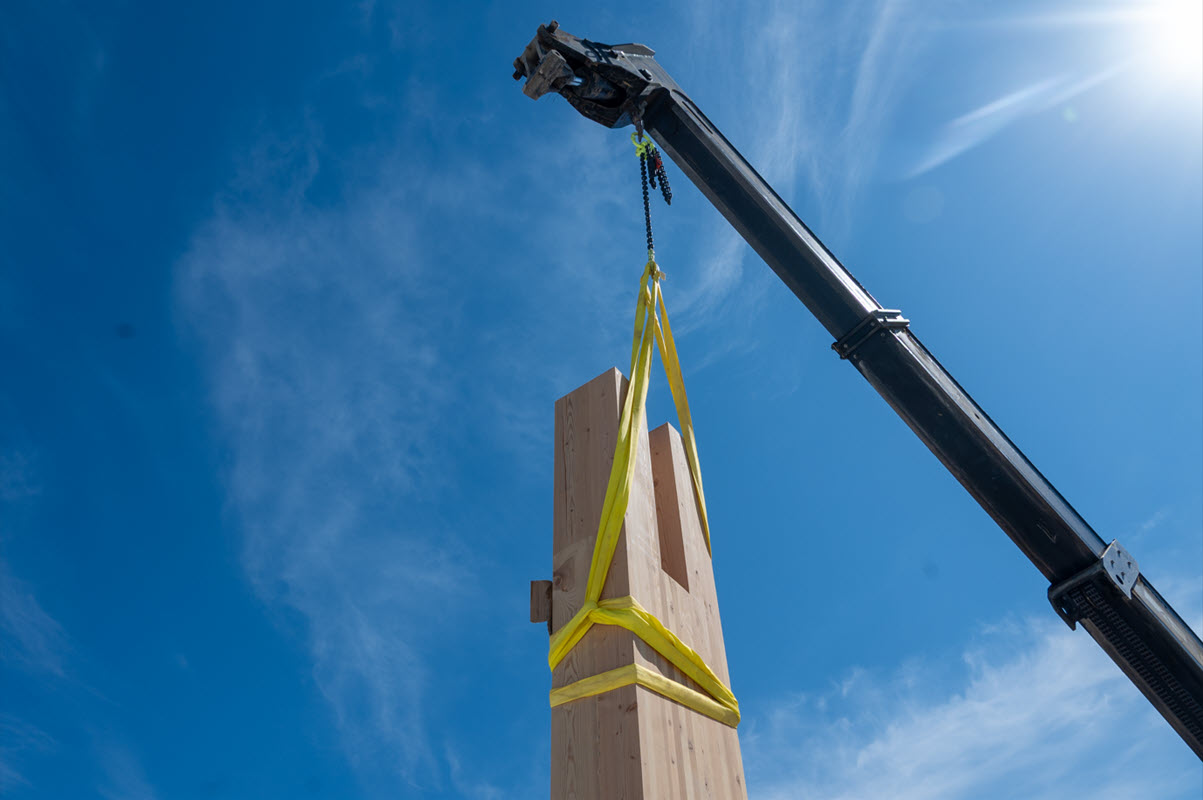
The mass timber structure at Contra Costa County’s East County Service Center began rising in August with the installation of the project’s first two timber columns -- an intentionally measured start before erection shifts into full production.
The mass timber structure at Contra Costa County’s East County Service Center began rising in August with the installation of the project’s first two timber columns -- an intentionally measured start before erection shifts into full production.
The project is the first mass timber effort for Webcor Builders.
Rather than bring a steady stream of timber onto the site while the crew was still working through the installation process, the project team scheduled just two columns for the first day. The balance of the columns was scheduled to begin arriving on August 24.
“The first one is always difficult,” said Project Director Alec Bangs. “We want to use these two with a learning curve and make sure that we know what we’re doing before we go nuts on production.”
In fact, it took a while to bolt the first column to its base as workers figured out how to align the pre-drilled holes in the column to the holes on the bracket to which it would be attached.
The full mass timber effort will involve considerably more than a handful of exposed wood columns. Mass timber is a major component of the Service Center’s structural system, with the design calling for ~130 timber columns per deck. The project also incorporates mass timber beams and decks, elevator shaft walls, and stair cores. Unlike Webcor's previous mass timber project, completed by Webcor Concrete in Oakland, the timber will remain visible in the finished county building.
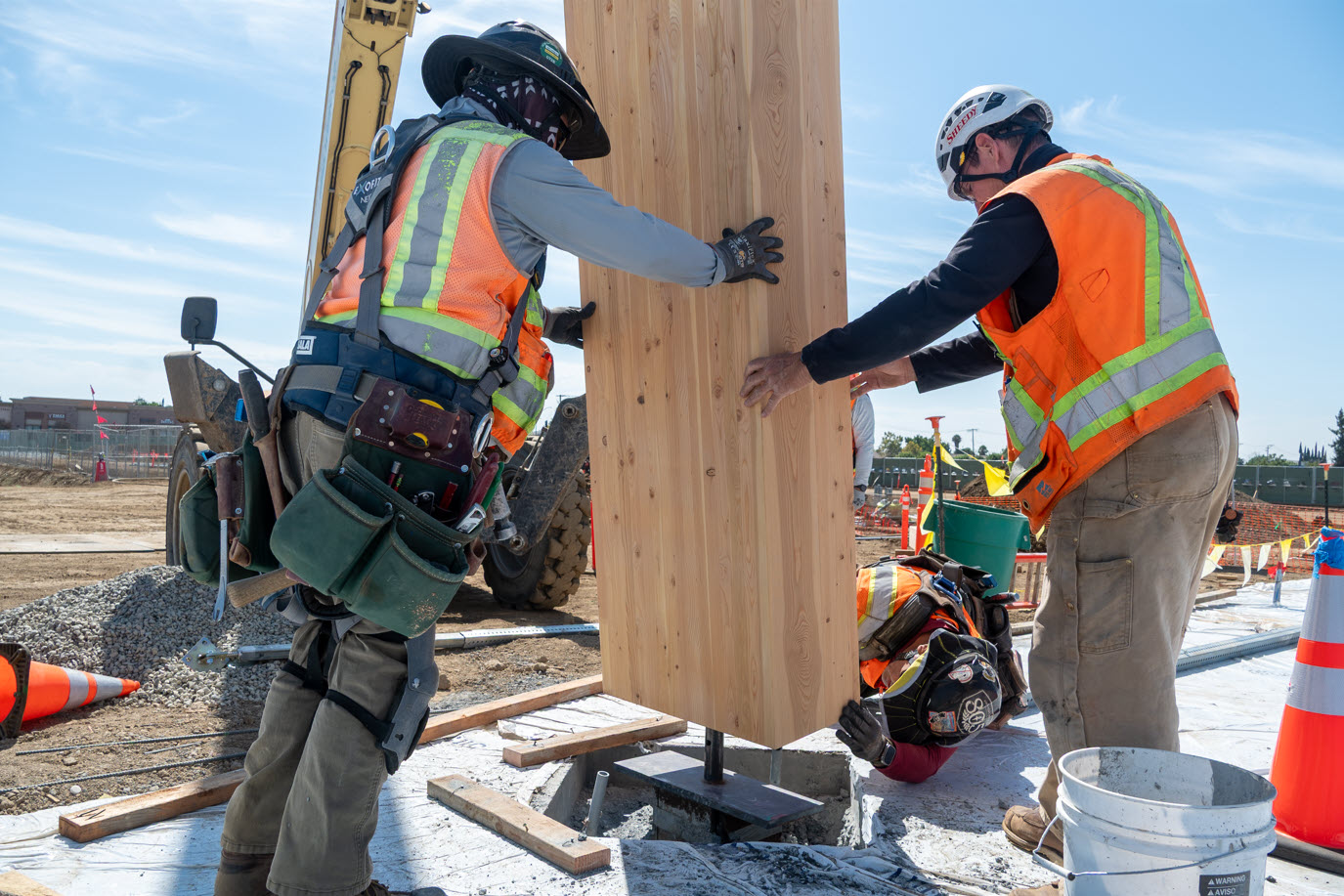
Prefabrication is central to the system. The timber components arrive pre-drilled and fabricated for their specific locations, allowing crews to set and connect pieces in sequence rather than fabricate them on-site.
The stair cores take that concept several steps further. They are entirely timber, and the first stair assemblies were scheduled to arrive in early September as prefabricated modules. “It’s walls, stairs, lighting, everything,” Alec says. “It's all pre-assembled.”
By the time the stair cores arrive, Alec expects column erection to be well underway. Once the timber decking is installed through Level 2 and tied together, the team can proceed to form and pour the remaining concrete shear walls, integrating the mass timber structure with the building’s concrete structural elements.
Mass timber is only one part of an unusually broad sustainability strategy at the East County Service Center. The project also features an extensive geothermal system consisting of 70 approximately 300-foot-deep bores organized into five loops. Rather than generating electricity, the system uses the earth as a giant heat exchanger, circulating water underground to reject heat from the building. On the hottest day of the year, the geothermal system is designed to provide about 70 percent of the building’s cooling capacity; for much of the year, Alec says, it should essentially handle the entire cooling load.
The site will also incorporate an overhead solar array installed under a separate owner contract, with the Webcor project team providing the underground infrastructure.


